
Top Signs You Need Garage Door Service – Don’t Ignore These
A garage door that takes 2 seconds longer to open than it did six months ago isn’t “getting old.” It’s telling you the spring tension is off, and that gap keeps widening until something fails under load. Most of the warning signs Highland Park homeowners ask us about are stages of one chain reaction, not separate problems. Knowing the progression tells you whether to schedule routine garage door repair or call for help today.
If you’d rather not climb a ladder and guess, call (855) 710-4739 and a technician will look at it.
Key Takeaways
- Noise, slowing speed, and uneven travel are usually the same problem at different stages.
- A 30-second manual balance test tells you more about spring and cable health than a visual inspection.
- A door that reverses before closing isn’t always a sensor issue. Force settings on the opener can fire the safety reverse too.
- Ground-level checks on cables, rollers, and hinges are safe; anything involving the springs, cables under tension, or the opener’s internal wiring is a job for trained technicians.
- Some symptoms can be watched for a few weeks. Others justify a same-week service call.
Why a Noisy Door and a Slow Door Are Usually the Same Problem
Homeowners tend to count noise and slowness as two separate complaints. Mechanically, they’re often the same story told at different points. When spring tension starts to drift, or a cable stretches and sits slightly off its drum, the door stops being neatly balanced. The opener has to work harder to lift it. That extra strain shows up as a groan at the start of travel, then as a door that climbs more slowly than it used to, and eventually as a door that struggles, stalls, or drops the last few inches with a thud.
Here’s how that progression usually runs:
- Early stage: the door makes a light grinding or popping sound during travel. Rollers and hinges are often the source, and a general lubrication and hardware check settles it.
- Middle stage: the sound deepens to a creak or groan and the door visibly slows from what it used to be. Spring tension loss or a worn cable winding is emerging.
- Late stage: the door becomes stiff at one point in travel, jerks, or stops short. The opener motor is now fighting an unbalanced door and is taking real wear.
If we’re called at the late stage, the spring and cable work is the main job and the opener often needs attention too. Called at the early stage, it’s usually hardware. That timing difference decides how much a Highland Park homeowner spends, which is why it’s worth reading a sound change before it becomes a slowdown.
The 30-Second Balance Test That Tells You What’s Wrong
The manual balance test is the single most useful check a homeowner can do, and it takes about 30 seconds. It isolates the door from the opener (and therefore from most electronics problems) and shows you directly whether the springs are carrying the weight they’re supposed to.
Here’s the safe version, done from the floor:
- Close the door and pull the opener’s manual release cord so the door is disconnected from the motor.
- Lift the door with the handle to about waist height.
- Let go and watch where it settles.
What the result tells you:
- Stays where you leave it: the springs are balanced and holding their part of the load. This is the result you want.
- Sinks or falls slowly: spring tension is low. That lost tension is the source of most slowness, opener strain, and eventual failure.
- Drifts up on its own: spring tension is too high, which can stress the cables and opener just as badly in the other direction.
- Won’t move easily, or moves with a heavy grinding feel: a cable is likely stretched or off the drum. Stop here and don’t force it.
Do not attempt any spring or cable adjustment yourself. High-tension springs store enough energy to cause serious injury, and a cable that’s slipped can snap loose without warning. When the balance test points at the springs or cables, that’s your cue to book a professional who handles spring repair safely as a core job, not a side step.
When a Door Reverses Before It Closes, It Isn’t Always the Sensor
Everyone has been told that a door that reverses is “the safety sensor.” The truth is that most safety reverses on Highland Park doors come from two places, and they feel different once you know what to check.
Sensor misalignment is the more common of the two. The small photo-eye lenses on either side of the opening should be facing each other square and roughly level with the floor. A garbage can nudged against one, a loose bracket, or a spider web across the lens will trip the reverse. It usually reverses at the same spot every time, or reverses at a height lower than the door has already started. Check that both lenses are clear and lined up; a Genie or Chamberlain opener with a bad eye is usually obvious once you look.
A force-setting issue on the opener feels different. The door reverses early, before the point of resistance, or reverses randomly at different spots in the travel. That means the opener’s force setting has drifted or its travel limits are off, and the opener is sensing resistance that isn’t really there. On a Clopay or Amarr door that’s new to a home, this usually comes from a setting that was never dialed in. That adjustment lives inside the opener. We don’t recommend reaching into a powered unit for it. Our technicians chase the garage door opener repair side of it, so the door and the motor are checked as one system rather than two.
What to Inspect From the Ground Level, and What Worn-Not-Failed Looks Like
You don’t need to touch anything to catch the early stages. Walk the door’s track from the ground and look at four things. Anything you can see safely from standing height is fair game; anything that requires reaching above your head or touching a moving part is not.
- Cables (look, don’t touch): check the stainless cables that run up the sides of the door. Worn cables look fuzzy, frayed, or have a single strand winding loose near the bottom drum. Failed means a visibly kinked, bunched, or slack cable hanging off the drum. Worn can wait a few weeks; failed shouldn’t.
- Rollers (look, don’t touch): the nylon or steel wheels inside the track should spin freely by eye and sit square. A roller that leans in the track or has a flat spot on one edge is worn. A roller that has lost its bearing and is streaking the track with metal is failed. Nylon rollers on a Wayne Dalton door that have turned yellow and cracked are past their working life.
- Hinges and plates: look for rust streaks or a hinge that’s visibly bent. Rust on hinges is normal aging on a Highland Park door that sees wet, salted roads in winter; a bent hinge is a call-worthy issue.
- Panels and seals: a panel that’s out of line with its neighbor suggests the door has taken a knock or one side has lost its setting. A bottom weather seal that’s torn to the point of light gaps under the door is an easy fix but worth doing before the cold returns.
Anything that catches your eye above head height, or anything that touches the spring assembly, goes to a professional. Our technicians have up to 15 years of experience and work on the most widely installed brands so the diagnosis is on your existing equipment, not a pitch for new hardware.
What Can Be Watched Versus What Warrants a Same-Week Call
Not every symptom needs the phone today. A few signs are fine to watch for a couple of weeks. Others are a same-week service call, because waiting turns a smaller repair into a bigger one.
OK to monitor for a few weeks:
- Light noise during travel that hasn’t worsened
- A door that’s a hair slower than it used to be but still balanced on the 30-second test
- Rust or slight play on a hinge you can see from the floor
- A weather seal starting to show a gap
Book a service call this week:
- The door fails the balance test (sinks, drifts up, or grinds)
- The door reverses when you’re not pressing a reversed command (sensor or force issue)
- A cable looks frayed or slack on one side
- The opener runs longer than usual or the door stutters at one point in travel
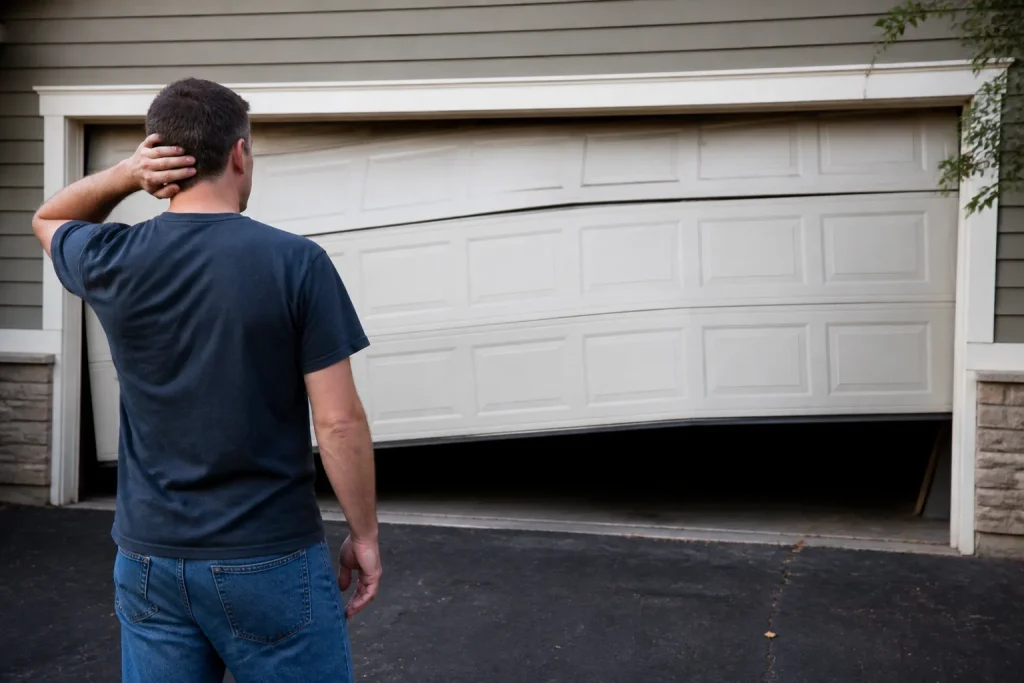
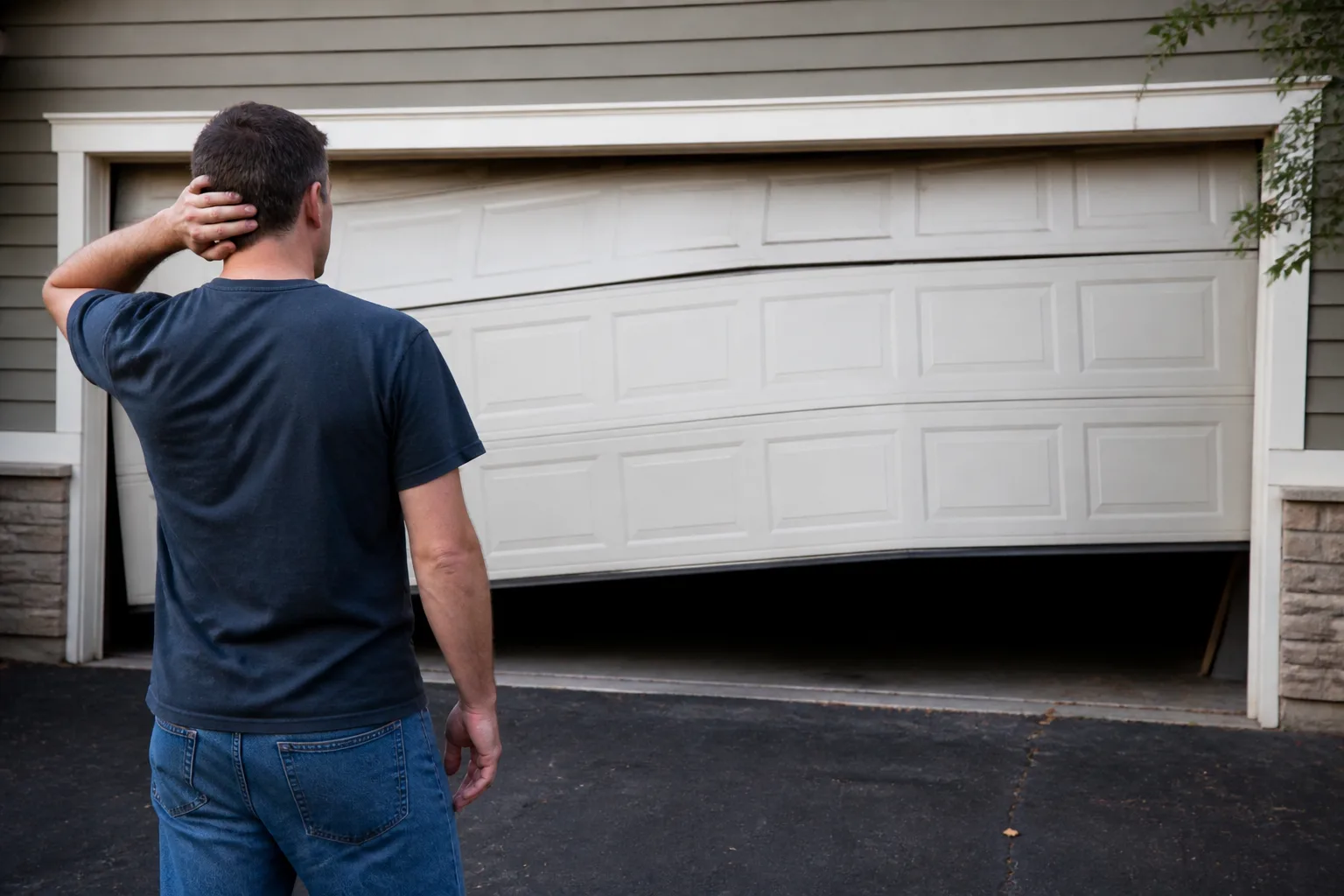
- Uneven movement: one side of the door is ahead of the other in the track
Stop and call now: a broken spring (you’ll usually hear it), a door hanging at an angle, a door that won’t move at all, or a cable that’s clearly off its drum. Don’t keep pressing the opener. On a Highland Park door under load, running the opener with a broken spring can bend the panel or cook the motor. A trapped car or a door that won’t open is where emergency service earns its keep, not as an add-on but as a standard call.
When to Call a Pro Instead of Watching a Video
We like a resourceful homeowner. We also know where the line is, and it sits well before you reach a winding drum. Anything involving the spring assembly, the cables under tension, or the inside of the opener is a trained-technician job. The risk isn’t just the work; it’s the false confidence a homeowner builds watching a clip on a phone screen while standing on a step-ladder. If the balance test, a frayed cable, or a reversing door has you reaching for tools, that’s the moment to put them down and call us at (855) 710-4739.
Related services in Highland Park: if the door itself has taken damage beyond repair, we also handle garage door installation, so you don’t need a second company to price a replacement. And if you’re just starting to research, our main page has the full picture of what Highland Park Garage Door Repair Pros covers.
The Bottom Line
Noise, slowdown, uneven travel, and a door that won’t hold its balance are usually the same underlying problem seen at four different stages. The 30-second balance test tells you whether it’s springs and cables or something smaller. Sensor misalignment and force-setting issues look similar from the driver’s seat but need different fixes. And ground-level checks on cables and rollers will tell you whether to watch a symptom for a few weeks or book a same-week call.
If you’re in Highland Park and need help, Highland Park Garage Door Repair Pros offers free estimates and a written price before any work starts. Call (855) 710-4739. We answer 24/7. Fast dispatch from 7am to 7pm, Sunday through Friday.
Frequently Asked Questions
The earliest reliable sign is a change in sound or speed, not a breakdown. A door that groans lightly, climbs slower than it did a few months ago, or feels stiff at one point in its travel is telling you. Run the 30-second balance test to confirm. If it sinks or drifts up, book a service call; if it holds where you leave it, you can likely monitor it for a few weeks. Call (855) 710-4739 if the test fails and estimates are free.
The manual release separates them. Pull the release cord, lift the door to waist height, and let go. If the door won’t hold position, the problem is springs or cables. If it holds and the opener is still misbehaving, the issue is on the opener side. Our technicians diagnose both from the same visit. Call (855) 710-4739 for a free estimate.
Most often it’s a misaligned or blocked safety sensor. If the door reverses before the point of resistance, or at random heights, it’s more likely a force or travel-limit setting on the opener. That adjustment is inside a powered unit and belongs with a technician. Call (855) 710-4739 and we’ll sort which one you’re dealing with.
You can look, but don’t touch. Frayed or fuzzy cables, rollers that lean in the track, and rust streaks on hinges are all visible from the floor. Anything that requires reaching up to the spring, the drum, or into the opener is a professional job. Call (855) 710-4739 if a cable looks frayed or slack.
Written by the team at Highland Park Garage Door Repair Pros.
Need Garage Door Help?
Call Highland Park Garage Door Repair Pros - the local pro we connect you with is licensed and insured, here with fast help in Highland Park.
(855) 710-4739