
Last updated November 21, 2026
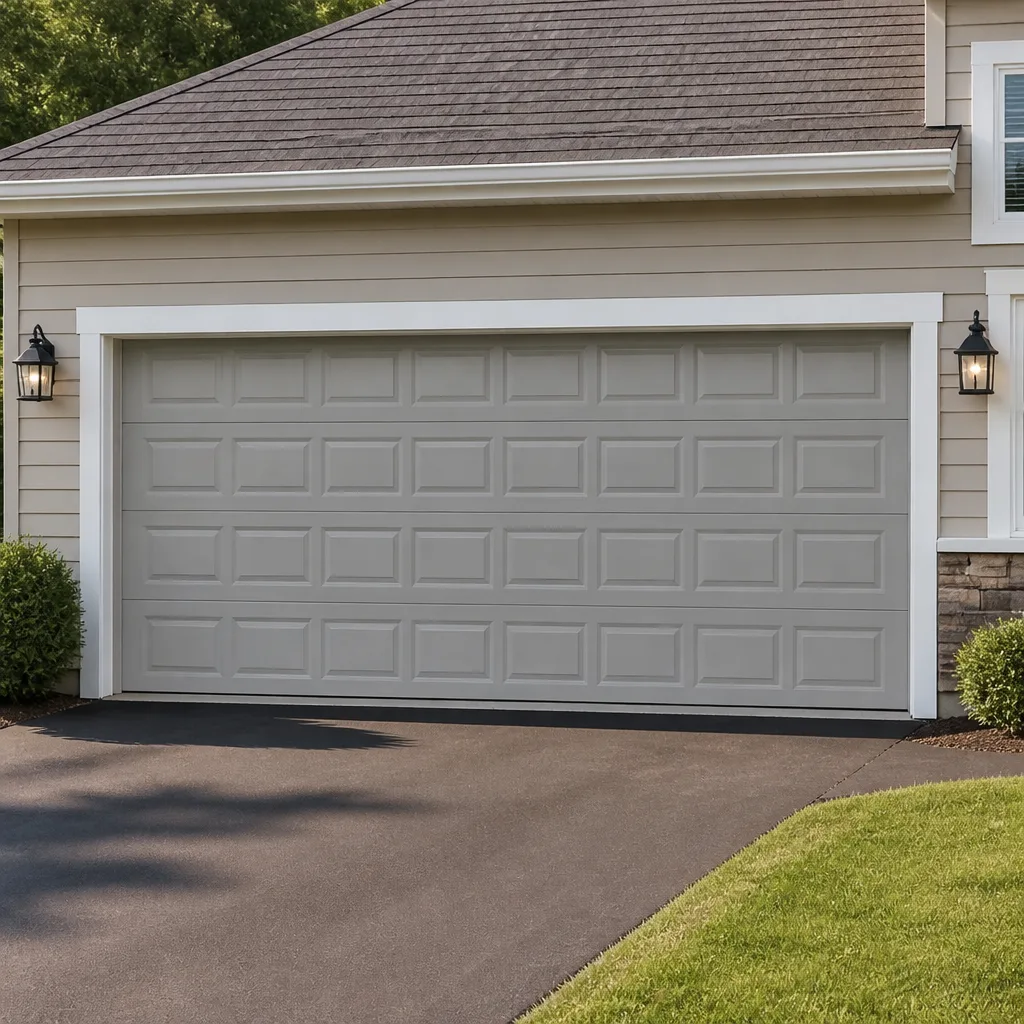 Raised-panel steel
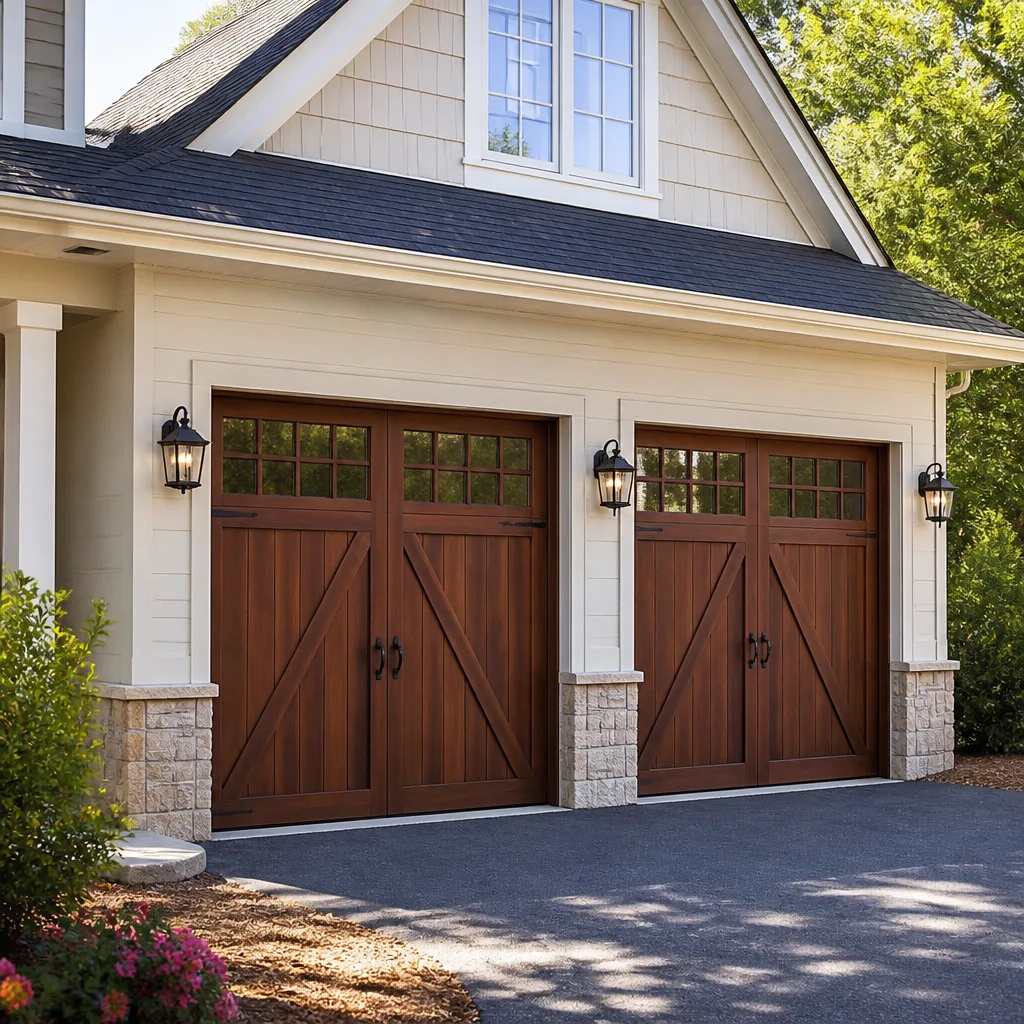 Carriage house
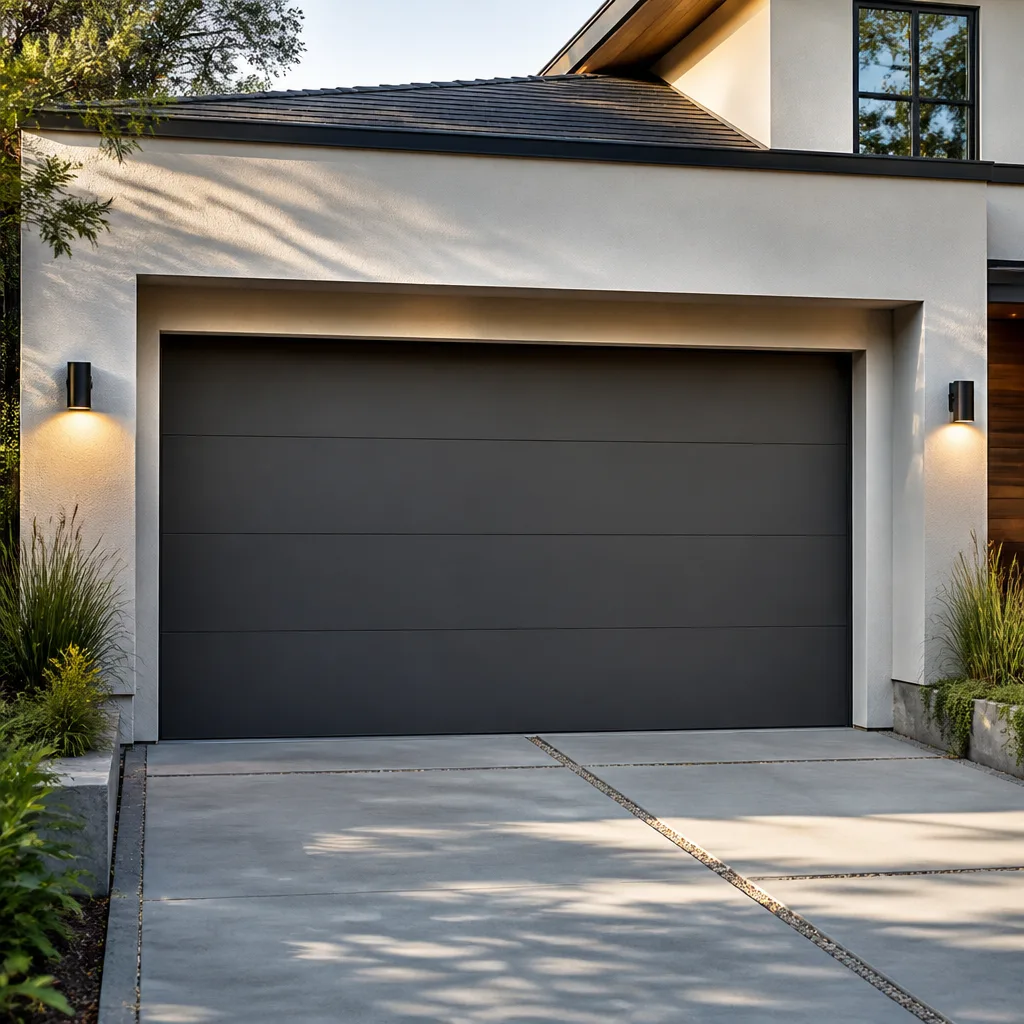 Modern flush
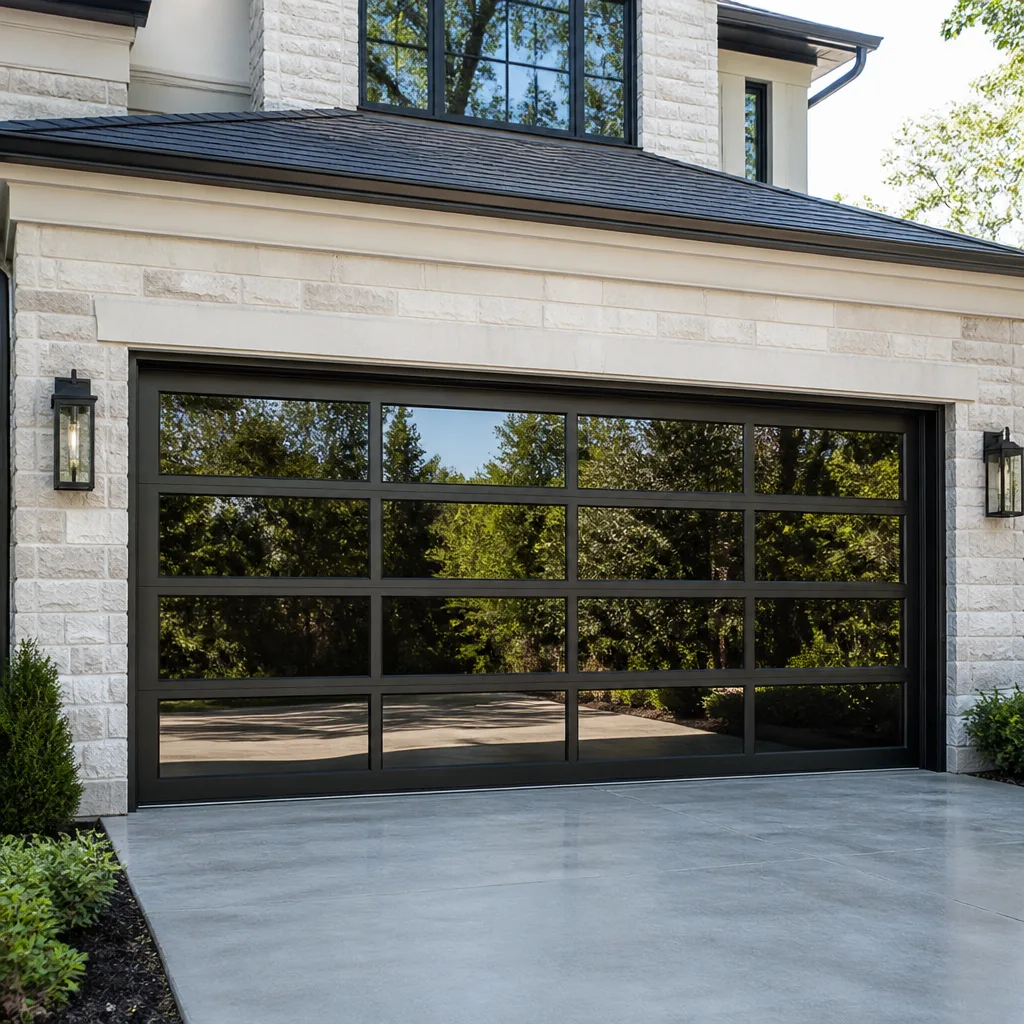 Full-view glass
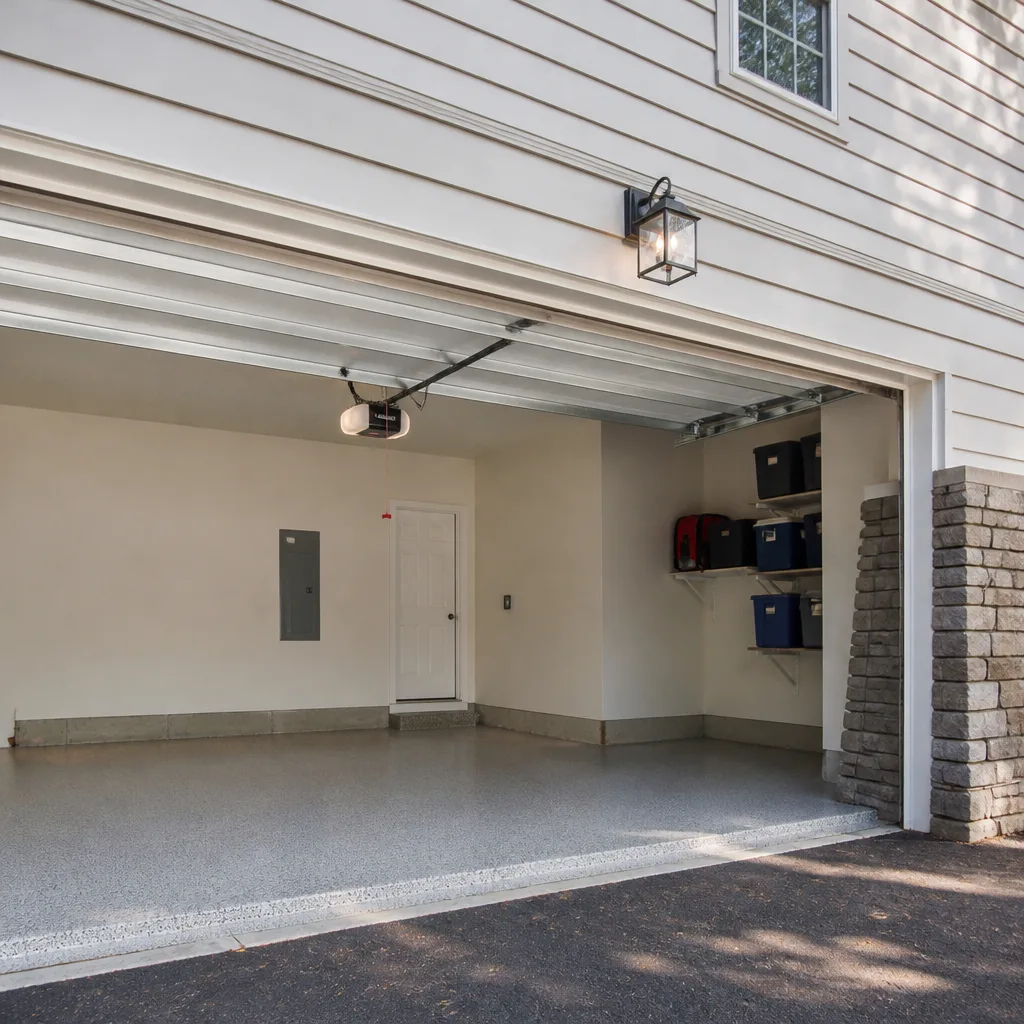 LiftMaster openers
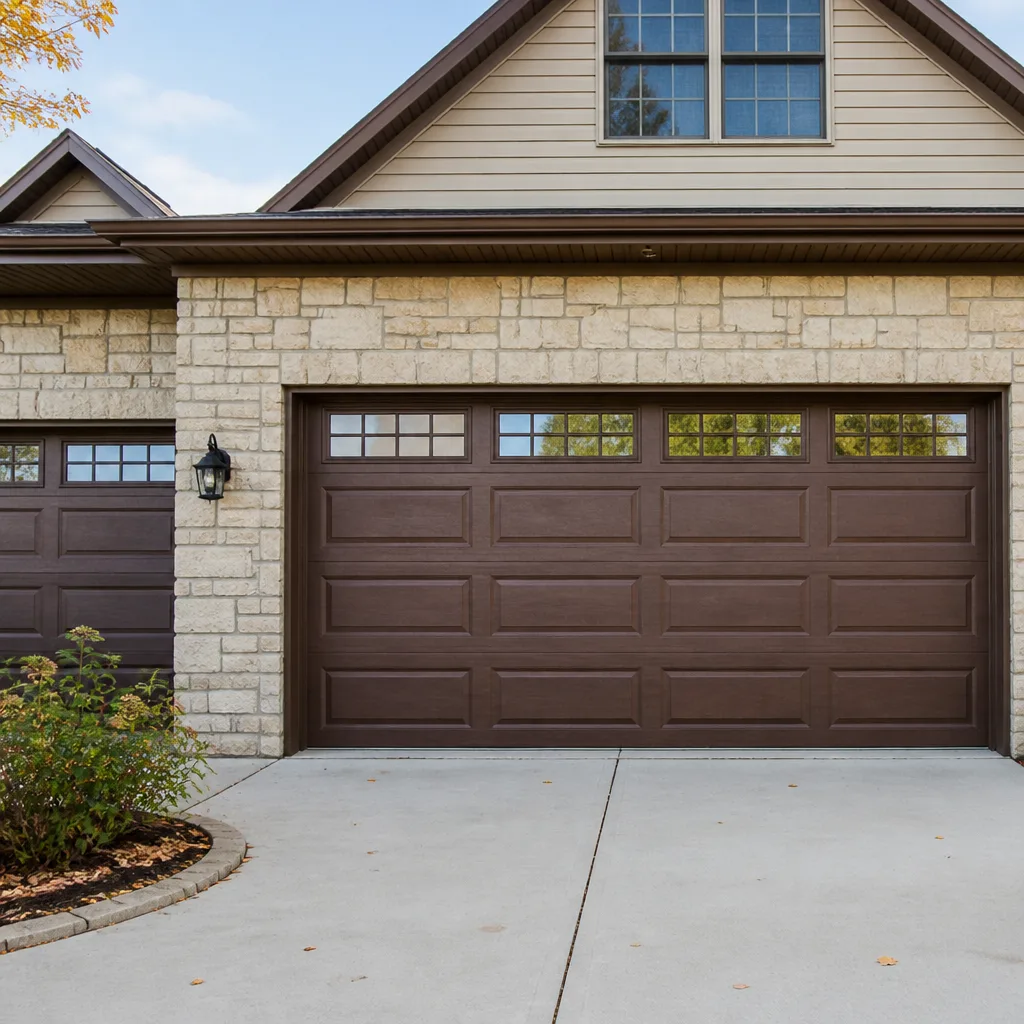 Chamberlain openers
Full 25-point door and opener safety check with every visit - springs, cables, rollers, tracks, and your LiftMaster or Chamberlain opener included
You get a price before we start. It does not change when the pro arrives.
Get your free estimateGarage Door Repair Maintenance Checklist for Highland Park Homeowners
The call that wakes us up most often in Highland Park isn’t a snapped spring. It’s a torsion tube that’s been quietly bending out of true for two years because nobody ever looked at the drum alignment. Springs announce themselves. Torsion tubes, cables, and rollers fail slowly and silently until the whole door comes down crooked or stops moving altogether. What follows is the checklist we’d hand a neighbor, ranked by how often each item actually causes emergencies in Highland Park homes, not by what fits neatly on a manufacturer’s pamphlet.
Quick Answer
A working maintenance routine for a Highland Park garage door covers four things: a monthly visual and balance check, lubrication every four to six months, a spring and cable inspection twice a year, and weatherstripping attention before each winter and again after the spring thaw. Most emergency calls we handle trace back to one skipped item on that list – usually cable fraying or torsion hardware that’s drifted out of alignment.
Styles & brands we work with
- Raised-panel steel
- Carriage house
- Modern flush
- Full-view glass
- LiftMaster openers
- Chamberlain openers
Table of Contents
- How often should you actually maintain a garage door in Highland Park?
- Why torsion tube and drum alignment top the failure list
- Cable fraying: the inspection that’s invisible until it’s dangerous
- How to test spring tension without tools
- Bottom seals and weatherstripping on Highland Park’s shifting concrete
- Lubrication points that matter and ones that cause damage
- The balance and safety-reverse test you can run in five minutes
- Opener maintenance most homeowners skip entirely
How often should you actually maintain a garage door in Highland Park?
Monthly for safety checks, every four to six months for lubrication, and twice a year for a full spring, cable, and hardware inspection. That’s the honest answer, and it’s tighter than most manufacturer schedules suggest. Highland Park’s climate earns the tighter schedule – the freeze-thaw cycle that runs from November into March works metal and concrete harder than a mild winter does, and a door that sits through a Minnesota cold snap and then a wet spring is doing more mechanical work than the same door in a temperate city.
Here’s the task frequency breakdown that reflects how failures actually happen, not how a manual would have you believe they happen:
- Every month: the safety-reverse test, a visual scan of cables and springs, and listening for new noises. Five minutes.
- Every four to six months: lubrication of hinges, rollers, tracks, and the torsion spring. Fifteen minutes.
- Twice a year (fall and spring): full inspection of springs, cables, drums, and torsion hardware. This is the one that catches the expensive stuff early.
- Once a year or at any sign of hardening: bottom seal and weatherstripping condition check, especially before the first hard freeze.
What we don’t recommend is the annual-only schedule many homeowners default to. In Highland Park, a year is long enough for a cable to go from a single frayed strand to a genuine hazard. When we handle garage door repair calls in this climate, the difference between a $200 repair and a full door replacement usually comes down to whether the problem was caught at six months or twelve. The homeowners who call us annually for a check are the ones who rarely need emergency help.
Why torsion tube and drum alignment top the failure list
Because a torsion tube doesn’t fail like a spring – it bends. Slowly, over a year or two, until the drums no longer sit square and the cables start wrapping unevenly. At that point the door jumps, grinds, or refuses to close fully, and the homeowner thinks the spring just went.
Here’s what’s actually happening. The torsion tube spans the width of the door above the panels, and it carries the full stored energy of the springs. When the drum on one end sits even slightly out of line with the drum on the other, the cables wind at different rates. One side of the door gets pulled slightly harder than the other. That differential load shows up as:
- A door that looks tilted when you glance at the gap under it
- Grinding or scraping on one side during travel
- Cables that sit loosely on one drum and tight on the other
- A door that hesitates at a point in its travel and then moves the rest of the way
Any of those signs mean the hardware needs eyes on it, not more lubrication. If you ignore them, the eventual failure isn’t a single spring or cable – it’s a bent tube, warped drums, and potentially damaged panels once the door drops unevenly. That’s the repair that costs a homeowner the most in Highland Park because it’s not a part swap; it’s a full teardown and rebuild.
The good news is that drum alignment is easy to check visually and quick to correct with the right tools. It’s also something a homeowner can’t safely fix, because correcting alignment means releasing stored spring tension first. Anyone who works on torsion hardware without the training is taking a real risk with their hands and their door.
Cable fraying: the inspection that’s invisible until it’s dangerous
A frayed cable almost always starts fraying at the bottom bracket or where it winds onto the drum – and both spots are hidden behind panel edges or above normal eye level. That’s why it’s invisible until one day the door answers with a snap and a bang.
Cables carry the weight of the door and the spring tension along with it. They don’t wear evenly either. The strands on the inside of the wind are the ones that take the stress, and they fray first from the inside out. By the time a strand breaks on the outer surface where you can see it, more are already gone underneath. If you check cables monthly and see any of the following, stop running the door and call a professional:
- Individual wire strands sticking out in a brush pattern
- A flat spot or kink in the wire that stays put after you move the door
- A cable sitting loosely off the drum instead of tightly wound
- Rust pitting, which weakens the wire well before it visibly breaks
What makes cable inspection worth mentioning separately is that Highland Park homeowners rarely catch fraying in time. In our experience the two failure patterns here are the winter cold snap and the first heavy spring thaw – the cold makes steel more brittle, the thaw brings moisture into the bracket joints. Both compress a few months of wear into a few weeks. If your door is more than a few years old, a twice-yearly cable inspection isn’t overkill. It’s what keeps a cable from snapping at the worst moment.
How to test spring tension without tools
You can tell most of what you need from how the door feels when you lift it by hand. With the door closed, pull the release cord to disconnect the opener, then lift the door halfway and let go. If it stays put or nearly put, the springs are close to balanced. If it slams down, the springs have lost tension. If it wants to travel upward on its own, the springs are over-tensioned and the door is in an unsafe state.
Here’s the step-by-step version:
- Close the door and pull the opener release cord so the door is manual.
- Lift the door to waist height and hold it there for a count of three.
- Let go. The door should stay near where you released it. If it drops a foot or more, the springs are losing lift. If it springs upward, back away and stop testing.
- Return the door to closed and re-engage the opener carriage.
What the result tells you about remaining service life is the useful part. Springs that hold the door close to position, with maybe a few inches of drift, are still working. Springs that let the door drop are near the end and should be replaced before they fail on their own schedule. Springs that pull the door upward are a genuine hazard and the door shouldn’t be operated until a professional adjusts them. The test itself is safe – you’re not touching the springs, cables, or torsion hardware. The moment you feel like reaching for tools or climbing a ladder to adjust a spring, that’s the moment to stop and call us. The springs on a garage door hold enough stored energy to break bones, and trained technicians use winding bars and a controlled release for a reason.
Bottom seals and weatherstripping on Highland Park’s shifting concrete
Highland Park’s concrete garage floors move. The same freeze-thaw cycle that stresses the hardware also heaves and settles slabs, and a floor that was flat when a door was installed can show a half-inch hump or dip a few winters later. The bottom seal is what compensates for that – until it hardens, cracks, or tears away from the retainer.
Here’s what to look for on the seal itself and the retainer behind it:
- Gaps at the corners: the seal has shrunk or pulled away. Cold weather accelerates this and lets in a draft, water, and cold air under the panels.
- A flattened profile: the seal has taken a set. Even if it looks intact, it’s not springing back against the floor.
- Brittle or cracked rubber: common in Highland Park after a hard winter. Squeeze a corner; if it crumbles instead of flexing, it’s time to replace.
- A hump in the concrete: if the door doesn’t compress the seal evenly across the width, the floor has shifted and the seal may need adjusting or the retainer may need shimming.
Weatherstripping around the sides and top of the door deserves the same look, especially the rubber flap at the header. Once that’s hardened, wind-driven rain gets into the panel joints, and water in the joints is what starts the slow rust that eventually pits a steel door. This is a cheap maintenance item that most homeowners skip until a pest or a wet floor makes it obvious. Check it before the first freeze, check again after the thaw, and you’ll rarely have a surprise.
Lubrication points that matter and ones that cause damage
Lubricate hinges, rollers, pivot points, and the tracks – and use a proper garage door lubricant, not WD-40 or grease. Every other lubrication “tip” you’ll find online is either useless or actively harmful.
Here’s what’s worth the time:
- Hinges: a small drop at each pivot. This is where most squeaks and grinds are born.
- Steel rollers: a few drops on the bearing. Nylon rollers don’t need lubrication at all and adding it attracts grit.
- Torsion spring: a light coat on the coils, which cuts friction between coils as the spring winds and unwinds.
- Tracks: a thin film is fine, but don’t use grease; it collects dust that turns into a paste.
What doesn’t matter: lubricating the panels themselves, spraying the safety sensors, or coating the opener rail beyond the manufacturer spec. What actively causes damage: WD-40 as a long-term lubricant (it’s a solvent more than a lube and leaves surfaces dry), silicone spray on the tracks (it dries and picks up grit), and grease on any part of the door that sees grit. Grease on a track is a shortcut to a jam. If you’re going to do this yourself, a proper garage door lube in a spray can, applied sparingly, twice a year, is all a Highland Park door needs.
One more thing most homeowners don’t know: over-lubricating is worse than not lubricating. A part that sits in a puddle of oil picks up every bit of grit that blows in from the alley, and that grit accelerates wear on the rollers and hinges it’s supposed to protect. A light coat that doesn’t drip is the target.
The balance and safety-reverse test you can run in five minutes
Two tests, and both matter. The balance test tells you about the springs and hardware. The safety-reverse test tells you the opener will back off before it hurts someone – a child, a pet, a delivery driver, anyone who ends up under a closing door.
Here’s the balance test, which pairs with the spring check above:
- Close the door and disconnect it from the opener using the release cord.
- Lift the door halfway, hold it for three seconds, let go. It should stay within a few inches of where you released it.
- Lift it to shoulder height and repeat. Same result expected.
- If it drops, or if it wants to travel on its own, don’t operate it via the opener. Call for a service.
The safety-reverse test uses the door’s own auto-reverse feature and takes maybe twenty seconds:
- Open the door fully, then place a piece of 2×4 laid flat in the middle of the floor where the door will contact it.
- Close the door with the wall button. It should contact the board and reverse immediately.
- Remove the board and test the photo-eye sensors by waving an object across the beam. The door should reverse before contacting anything.
If either test fails, the opener needs attention. Not all failures are dangerous, but a door that doesn’t reverse on contact shouldn’t be operated until it’s been looked at. In Highland Park, the most common cause we find is misaligned photo-eye sensors, often from a foot, a stroller, or a broom that swung into them. The fix is usually a quick realignment. If your opener is a LiftMaster, Chamberlain, or Genie unit, the reverse test works the same and the diagnosis is the same.
Opener maintenance most homeowners skip entirely
Every opener brand we look at – Raynor, LiftMaster, Chamberlain, Genie, and the rest – benefits from three maintenance checks most homeowners never do: running the door a few times at the start of each season to listen for changes, checking the force-setting dial once a year for drift, and clearing the photo-eye lenses of dust.
The seasonal run matters more than it sounds. Garage doors sit unused for weeks in Highland Park. Then the first cold morning comes, the door is asked to lift, and any stiffness from the cold makes it work harder than it did in summer. Running the door through a full cycle a few times before that cold morning finds the issue early. Force settings drift over years; if a door is beginning to bind, the opener compensates by pushing harder until the force limit is reached and it refuses to move. A door that opens normally in mild weather and refuses to close on a cold morning has told you something is binding. Don’t reset the force dial to get past it – inspect the door first. If the door itself is the problem, garage door opener repair won’t solve it, and pushing a stronger opener at a binding door just wears both out faster.
The photo-eye lenses are the third check that’s worth doing every season. Dust, spiderwebs, and condensation on the lens are the most common reasons a door refuses to close at the most inconvenient time. A dry rag and thirty seconds is the whole fix, and it saves a service call. If your opener uses a smart-hub feature or a phone app, test its closure behavior a couple of times a year too. App controls are a second way into the same logic the wall button uses, and they should react the same way.
Common Mistakes to Avoid
- Treating an annual check as enough. In Highland Park’s climate, a year is long enough for a cable to go from a single frayed strand to a snap. Twice a year is the honest minimum for the inspection that matters.
- Greasing the tracks. Grease collects grit. On a Minnesota door that sees dust and salt-tracking, grease on the tracks turns into a paste that wears the rollers faster than a dry track would.
- Adjusting the force dial instead of finding the bind. Turning up force to get past a stiff door hides the problem and wears the opener motor. If the door is binding, the door is the problem.
- Winding or adjusting torsion springs yourself. A torsion spring carries stored energy that can break a wrist or worse. Homeowners shouldn’t touch torsion hardware even with a ladder and a YouTube tutorial. Springs are a trained-technician job.
- Ignoring a growing gap under the door. Highland Park concrete heaves and settles. A gap that opens in a corner is sometimes just the seal, but sometimes it’s a floor shift that will get worse next winter if the retainer isn’t adjusted.
- Skipping the balance test because the door “feels fine.” The balance test is a zero-tool five-minute job, and it catches failing springs months before they snap. It’s the single most valuable check a homeowner can run.
- Assuming the brand limits your repair options. A Raynor door with a Chamberlain opener and Genie accessories is normal. A brand-agnostic technician works with what you have instead of steering you to a replacement because it’s the brand they stock.
See the difference
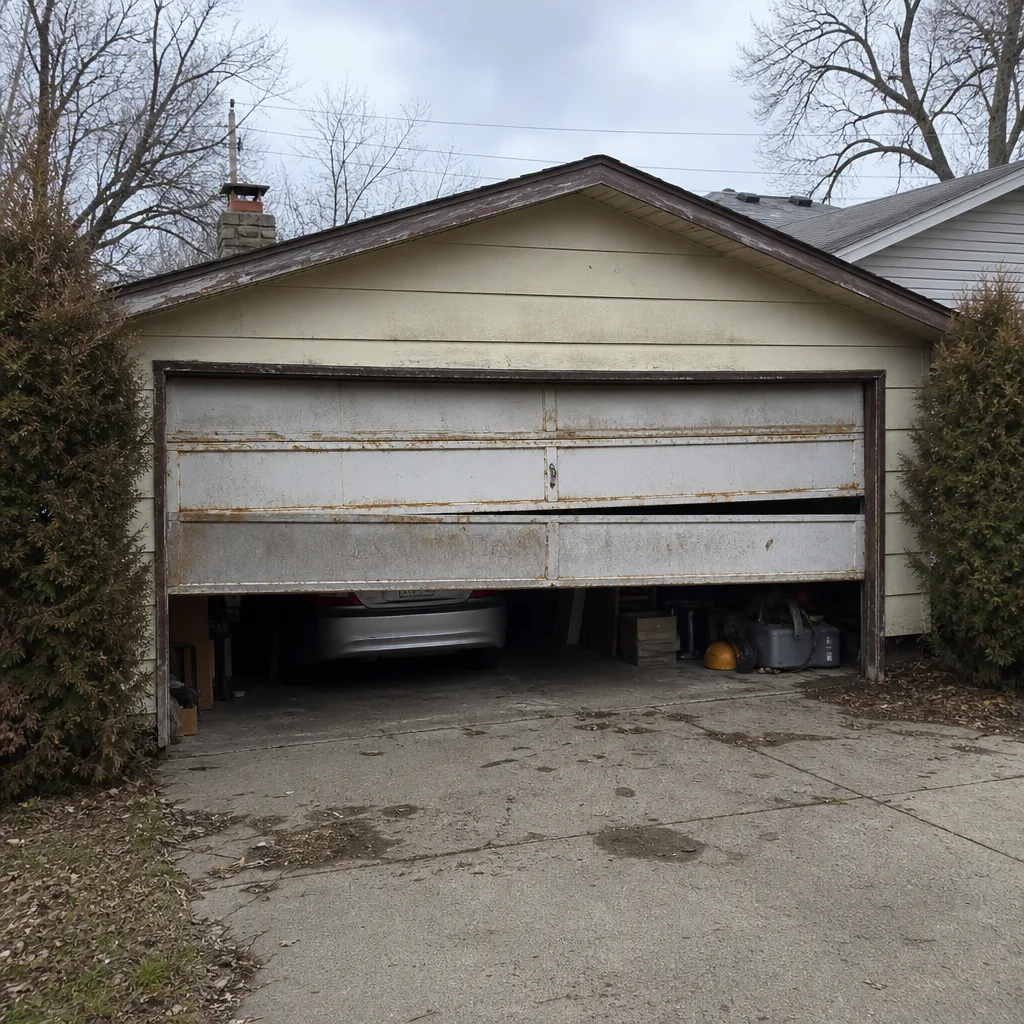 Before
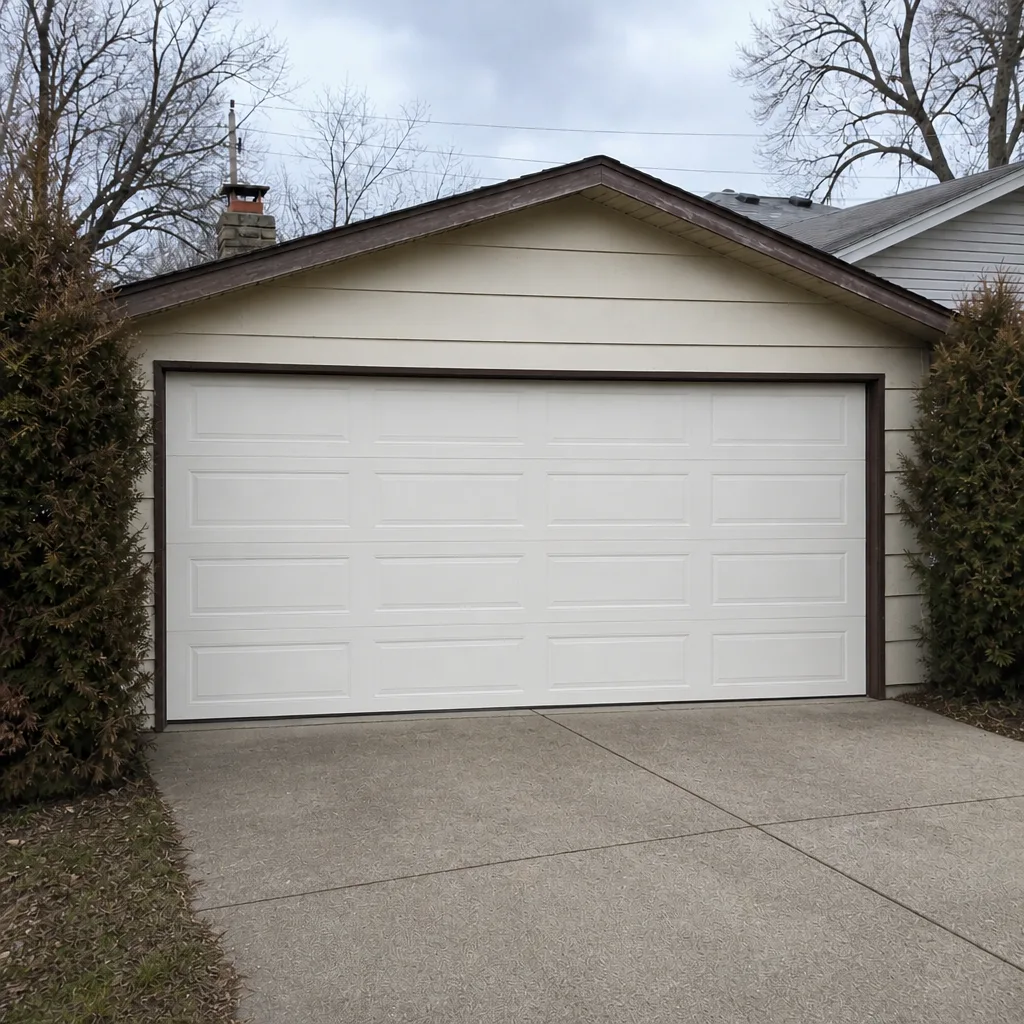 After
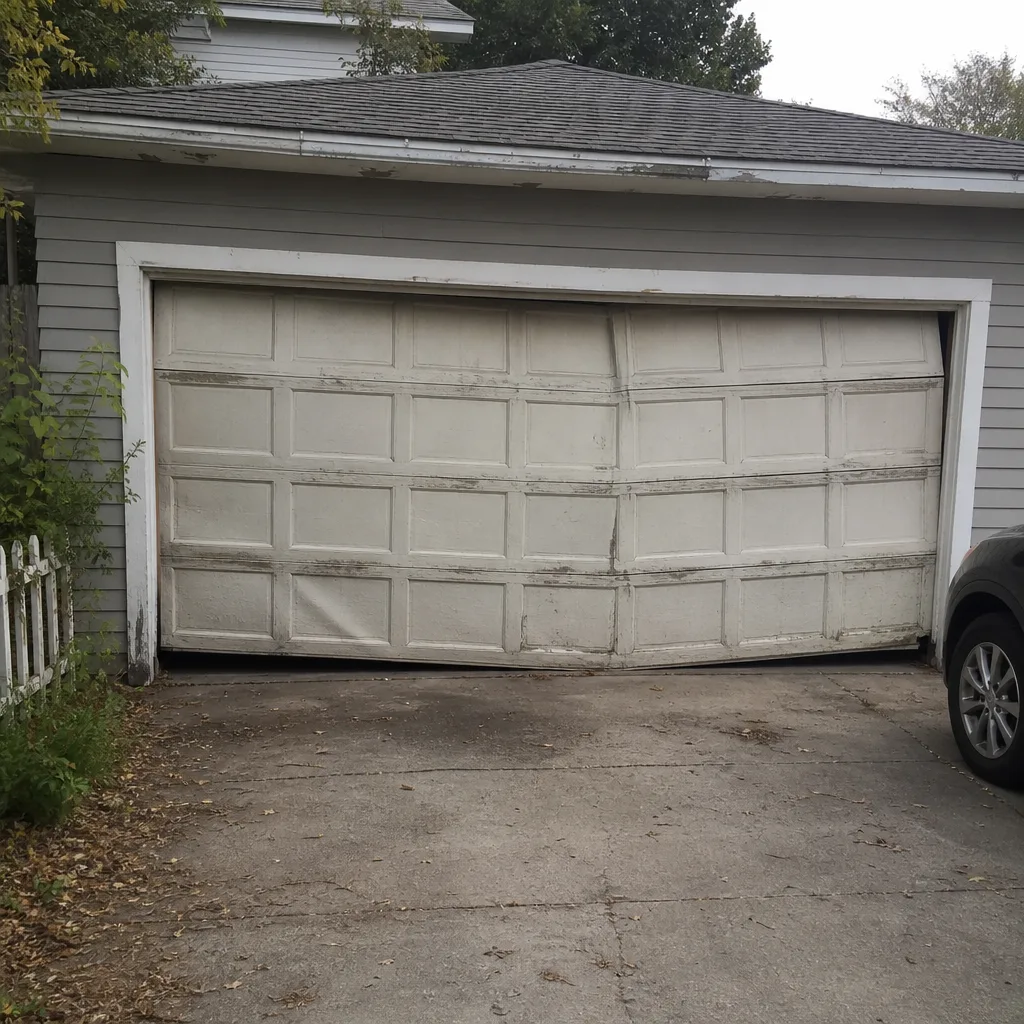 Before
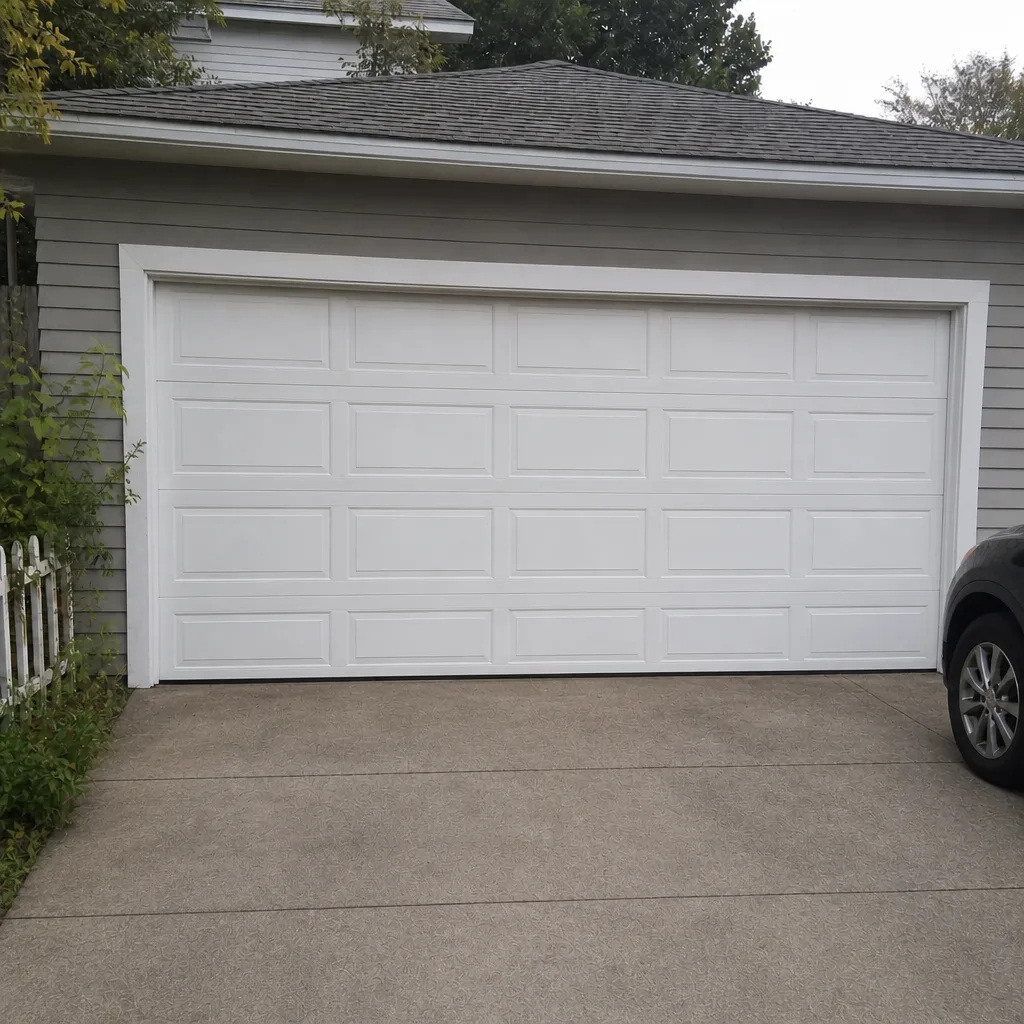 After
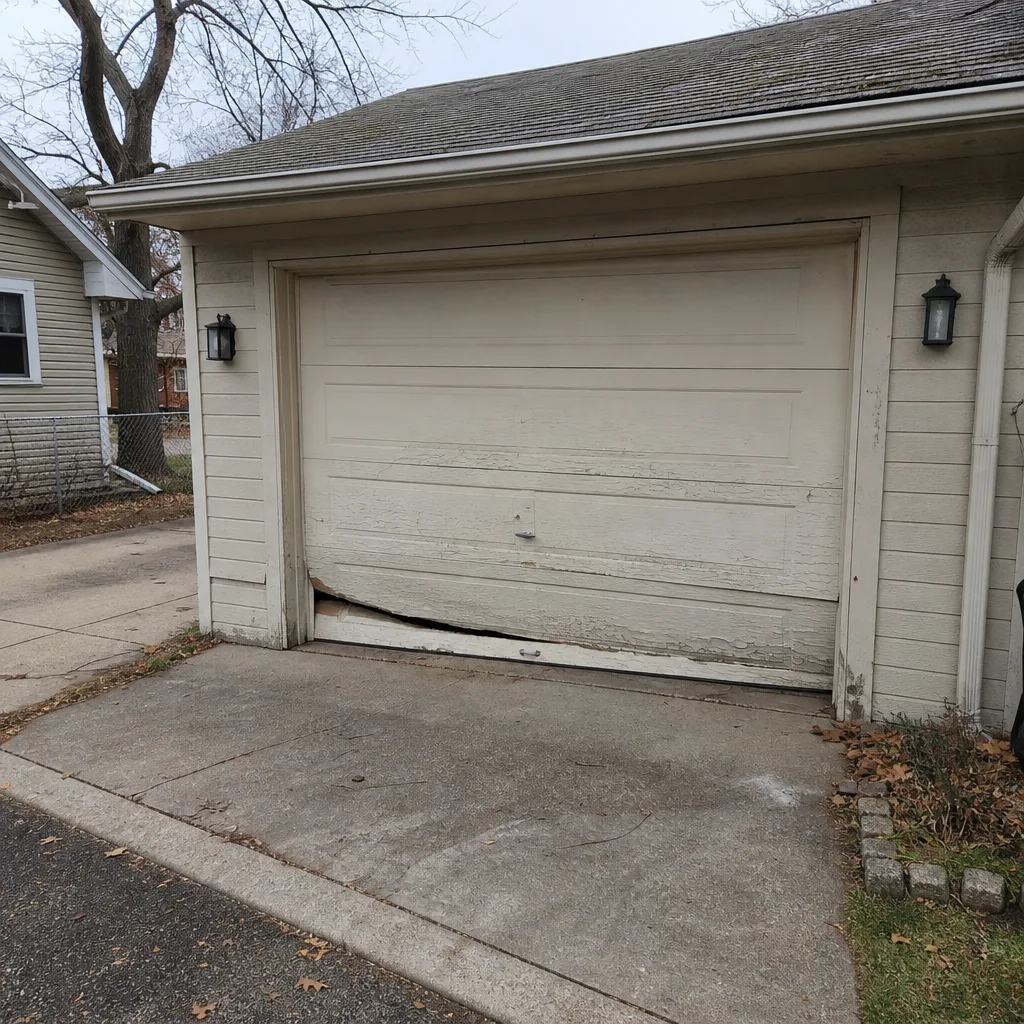 Before
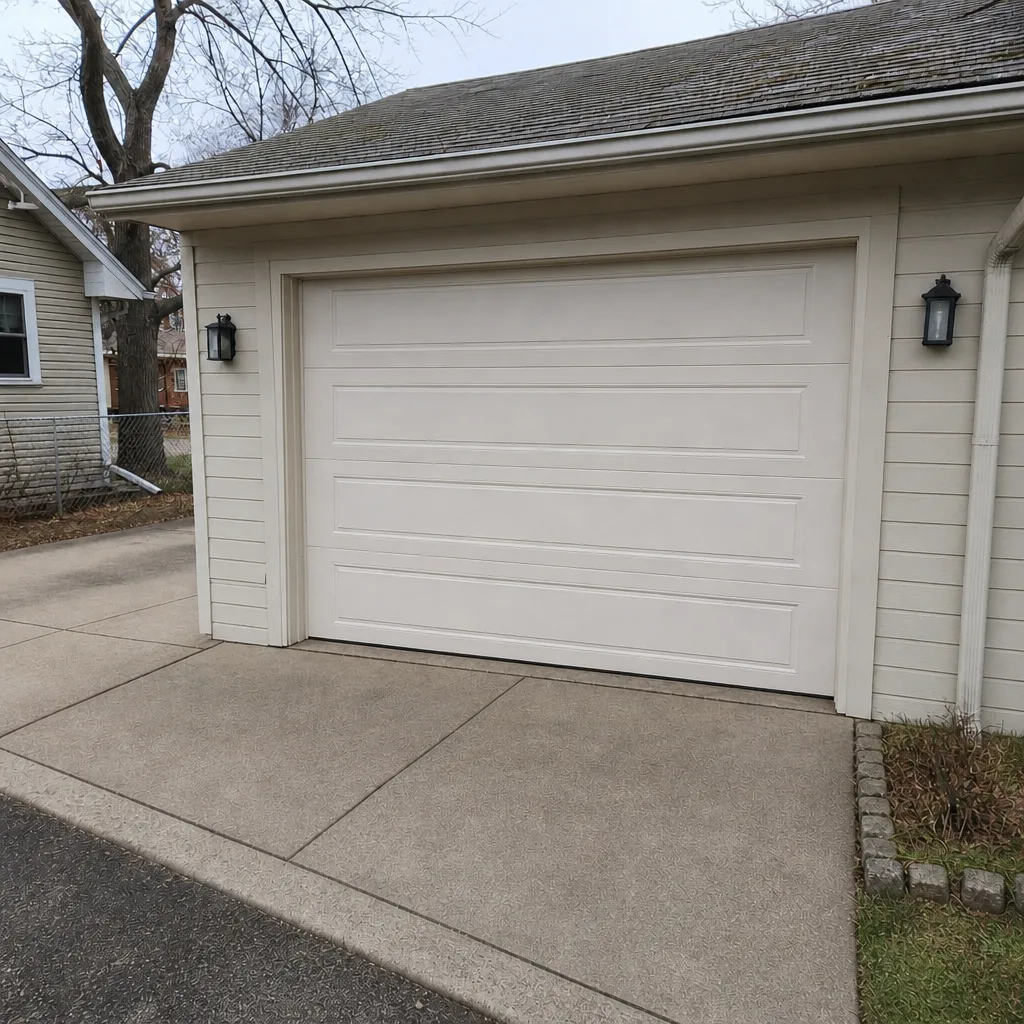 After
When to Call a Professional
Call when the door won’t stay up when released, when a spring has visibly broken or the door feels heavier than usual, when a cable shows any sign of fraying, when the door travels unevenly or grinds, or when the auto-reverse test fails. Call when the opener force setting has been turned up repeatedly to get the door to close, or when the door has come off its tracks. Those are the failures where the difference between an experienced technician and a homeowner with tools is safety, not just speed. Highland Park Garage Door Repair Pros offers free estimates in Highland Park – call (855) 710-4739. We answer 24/7. Fast dispatch, 7am-7pm.
Frequently Asked Questions
Twice a year at minimum, with a quick visual scan every month. Cable fraying starts at the bottom bracket and where the cable winds onto the drum, both spots that are hard to see until a strand snaps. Highland Park’s freeze-thaw cycle compresses a few months of wear into the first cold snap and the spring thaw, so twice-yearly inspection catches fraying while it’s still a repair rather than an emergency.
Yes. Disconnect the opener with the release cord, lift the door halfway by hand and let go. A door that stays within a few inches of where you released it has working springs. A door that drops has lost spring tension and needs replacement. A door that springs upward is a hazard and shouldn’t be operated until a technician adjusts it. Call (855) 710-4739 for an exact quote – estimates are free.
A full inspection of springs, cables, drums, and torsion hardware, a light lubrication of hinges, rollers, tracks, and the torsion spring, a bottom seal and weatherstripping check, and a test of the safety-reverse and balance functions. That’s the pre-winter list. Do it once before the first hard freeze and again after the spring thaw, and the door will work through the whole season without a surprise.
Something in the door is binding, and the cold has made the binding worse. Cold thickens lubricant, tightens metal, and stiffens anything rubber or plastic in the mechanism. The opener’s force setting was likely already compensating for the bind, and cold weather pushed it past the limit. Don’t turn up the force dial – have the door inspected so the actual bind gets fixed. Call (855) 710-4739 for an exact quote – estimates are free.
Probably not. Noise usually comes from worn rollers, hinge pivots, or a torsion tube that’s drifted out of alignment – not the tracks. Lubricating the tracks may quiet a squeak briefly, but grease on the tracks collects grit and causes more wear. Lubricate the hinges, rollers, and torsion spring, and have a technician look at anything that grinds, jumps, or hesitates during travel.
No. A technician fluent in multiple brands is more useful than one locked into a single line. We work with Raynor, LiftMaster, Chamberlain, Genie, and several other common brands, which means the diagnosis is about the actual failure and not about what a brand happens to sell. When the time comes for a garage door installation, that same brand-neutral view means you’re matched to a door and opener that fit your needs, not the line the shop carries.
The Bottom Line
Highland Park’s climate punishes every part of a garage door slowly. Torsion tubes bend, cables fray inside the wind, seals harden through the first freeze, and concrete moves enough that the bottom seal needs attention twice a year. The maintenance checklist that works here is not the annual-visit version. It’s monthly safety checks, twice-a-year spring and cable inspections, and a proper lubrication routine using the right product rather than whatever spray can is closest to hand. The number-one source of emergency calls in this city is slow drift no one bothered to catch – the door works fine, until the morning it doesn’t. A five-minute balance test and a six-month cable inspection are what make the difference between a straightforward repair and a full teardown. Our technicians have up to 15 years of experience with these failures, and we’d rather spend a few minutes helping you avoid the emergency than answering the call after the door has dropped. Call (855) 710-4739 for a free estimate. We answer 24/7. Fast dispatch from 7am to 7pm, Sunday through Friday.
Written by the team at Highland Park Garage Door Repair Pros.